

If you receive an inspection report with a list of items on it that seems to be more about remodeling than needing repairs, such as: new roof, dated plumbing, cracks in the foundation, HVAC system nearing end of life, etc., and then you see the estimated costs total is more than $30,000+; take a deep breath. Before flipping out or cutting your selling price to make the issue go away, relax. You might actually have more options than originally thought.
Why $30,000 in Repairs Feels So Overwhelming
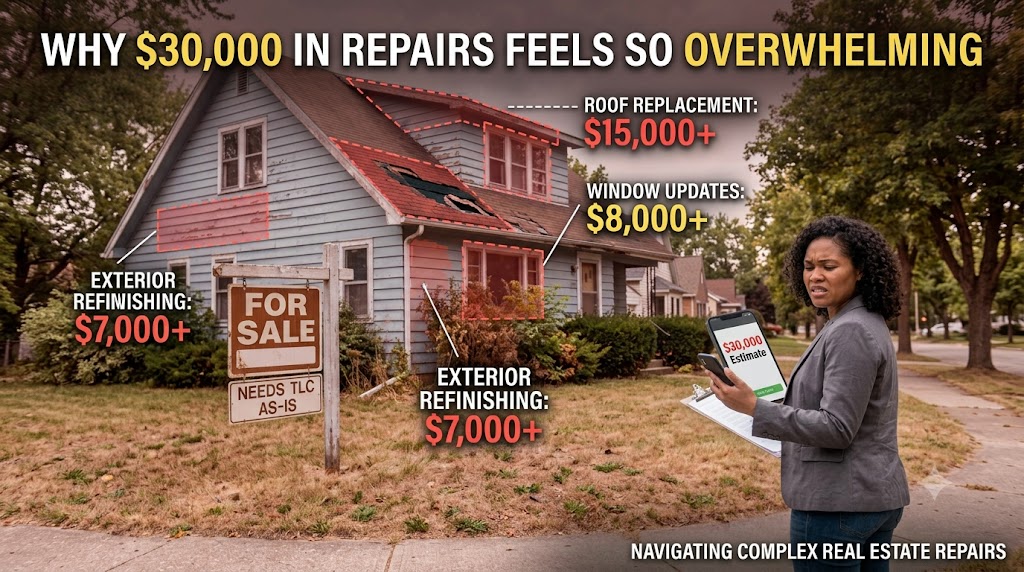
The uncertainty of whether or not you will get paid is just as bad — will buyers leave? Will you need to take a loss on repairs to recover your costs? Will you fix everything yourself first? These three questions are genuinely difficult to accurately answer, because no two people (or properties) are alike. The correct path depends on your decision to proceed with repairs and how much it will cost you to complete the project yourself or through hiring a contractor.
Option 1: Make the Repairs Yourself

If you have enough time, money, and patience, repairing issues before listing can provide a higher sale price, however often you discover other problems once the contractor begins working on the major repair. A “simple” roof repair can uncover rotting decking. A plumbing issue can demonstrate that there are also much larger pipe problems behind the wall. Doing this route can take months and tie up money you don’t currently have available.
Option 2: List As-Is and Negotiate
You can sell your home “as is” and disclose any repairs that are needed. This may be appealing to some buyers, especially investors. However, traditional buyers are often unable to be approved for financing on a home that has any major structural, electrical or roofing repairs because the lender requires those items to meet specific lender guidelines (standards). This has the potential to significantly decrease the number of potential buyers and will create a longer extension of time that the house is on the market.
Option 3: Offer a Repair Credit
Rather than making any repairs before closing, you provide the buyer with a credit at closing towards their estimated repairs. Since you do not have to make these repairs before closing, it will be off your list of things to do, however all loans require that the property passes inspection and appraisal prior to being financed, and you will be negotiating from a position of knowing that “there is something wrong with this home” which the buyer will use for bargaining power.
Option 4: Sell to a Cash Buyer
This gives many sellers a sense of relief. Investors, especially in the real estate business, purchase houses in whatever condition they are currently in. There will be no repairs done before selling; there is NO staging; there is NO waiting for a buyer to obtain financing; and there will be NO inspection contingencies that could delay or cause your home to be sold at the last minute. The entire renovation process is taken out of your hands, and you will get an easy timeframe for closing that usually can be completed in a few days to several weeks (as opposed to months).
So, Which Option Is Right for You?
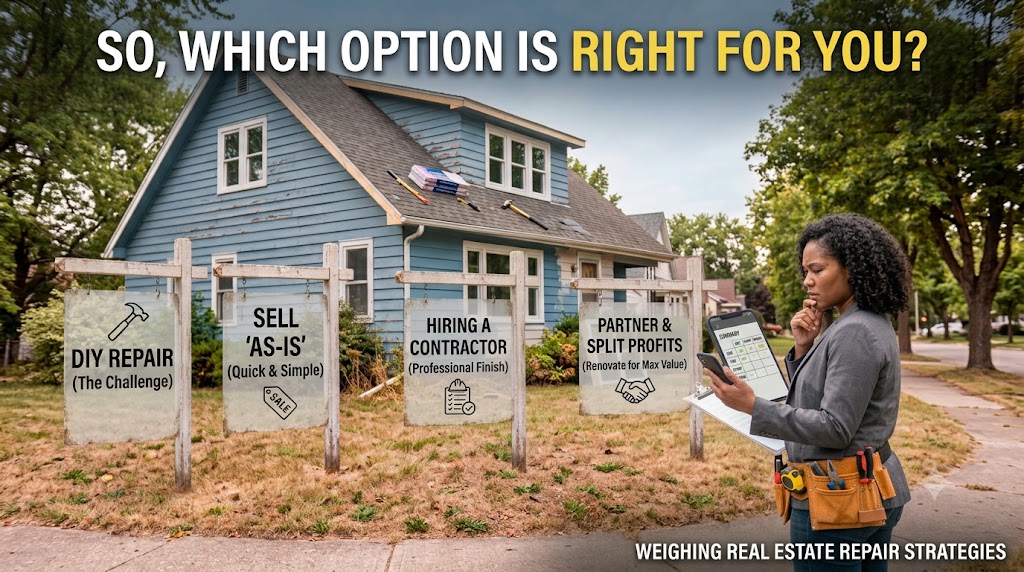
Your timeline, your financial limits, and how much stress you want to take on are the primary factors determining what direction to go in (repairs or sell as-is). If you have sufficient time and money available to invest into repairs prior to listing then you can potentially earn more. If you need a quicker sale with guaranteed results and do not want/need to deal with any renovations you should sell your house “as-is” to a cash buyer.
The Bottom Line
Big repair costs don’t have to equal major stress. Take the time to research all of your options before deciding to make major renovations or accept a lowball offer on your home. If you want to sell your house fast without performing any repairs, AJ Buys Houses can help. We will provide you with a fair cash offer, and we will work with you to create a timeline that meets your needs.
FAQs
Q: My house needs about $30,000 in repairs. Do I have to fix everything before I sell?
No, you can sell as is, provide a repair credit, or sell to an all-cash buyer who will take the property in its current state. You can fix everything up before selling; however, it is just one of many ways to sell your house. It’s not a requirement to sell by fixing everything up first.
Q: Will I lose money if I sell my house without fixing it up first?
It is not always the case. Some buyers do apply repair costs against the sales price in their offer but you also save contractors and your time and worry of overseeing the renovation. When you add up the cost of repairs, the total of holding costs or expenses for being in the structure but not selling it and the potential for project delays, the possibility of selling as-is/without renovation could result in a similar or improved return than if you renovated the structure prior to sale.
Q: Can I even get a buyer if my house has major issues like a bad roof or foundation problems?
It is contingent upon the individual buyer’s circumstances. A traditional buyer who is financing the purchase of a property may experience difficulty getting approval from a lender to obtain a mortgage, whereas an all-cash buyer or investor can buy the property in its current condition without having to make any repairs that would prevent them from being approved for financing.
Q: What’s the difference between offering a repair credit and just selling as-is?
A repair credit is when you continue to list the house but give the buyer money at closing to do the repairs instead of actually doing the repairs yourself. A cash buyer purchasing as-is skips the repair credit step altogether, because they do not have to negotiate repair credits, have an inspection done, or have to have financing contingencies related to repairing the property.