

You have begun the process of selling your home, and have suddenly remembered that you have knob and tube wiring or that aluminum wiring that everyone whispers about from years ago. Perhaps the wiring was flagged by the inspector, or you just always thought of it as “all that old wiring” until now. You are probably wondering if it will ruin your sale…. the good news is that it does not; however, it does impact how to sell your house if it has Knob and Tube or outdated electrical wiring
Why Outdated Wiring Worries Buyers
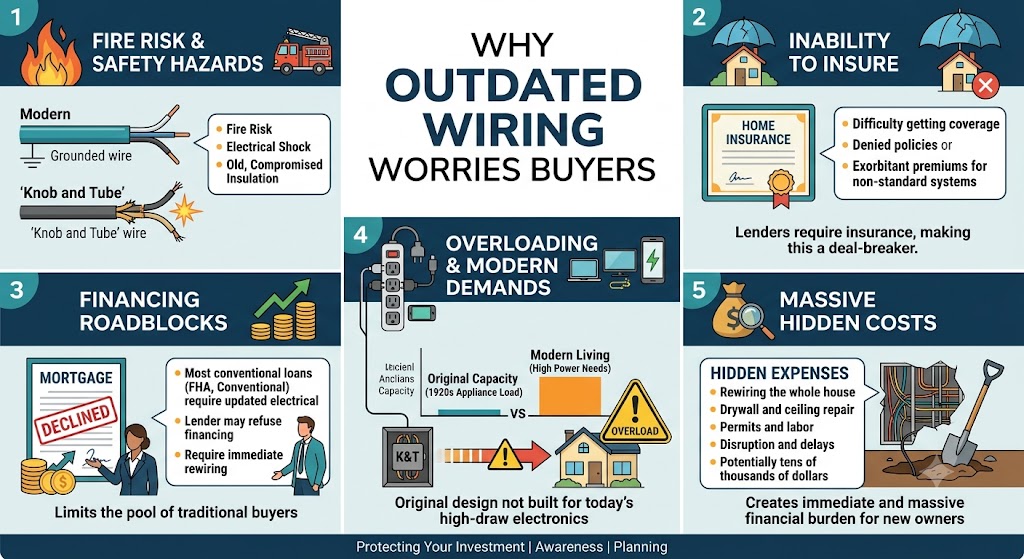
Knob as well as tube cabling has been typically used in homes that were constructed prior to 1950; knob & tube are missing ground wires, and they were not created to handle the electrical load required today such as air conditioning units, several cellphone chargers, and a kitchen full of various appliances. Insurance carriers, for the most part, have categorised knob & tube cabling as a potential fire hazard, and most carriers do not provide policy coverage for homes that have an active knob/tube system unless they are first replaced. The fact that a buyer will likely be unable to obtain homeowners’ insurance due to the knob/tube system can be more frustrating for new buyers than the electrical issues themselves.
Why It Can Scare Off Traditional Buyers
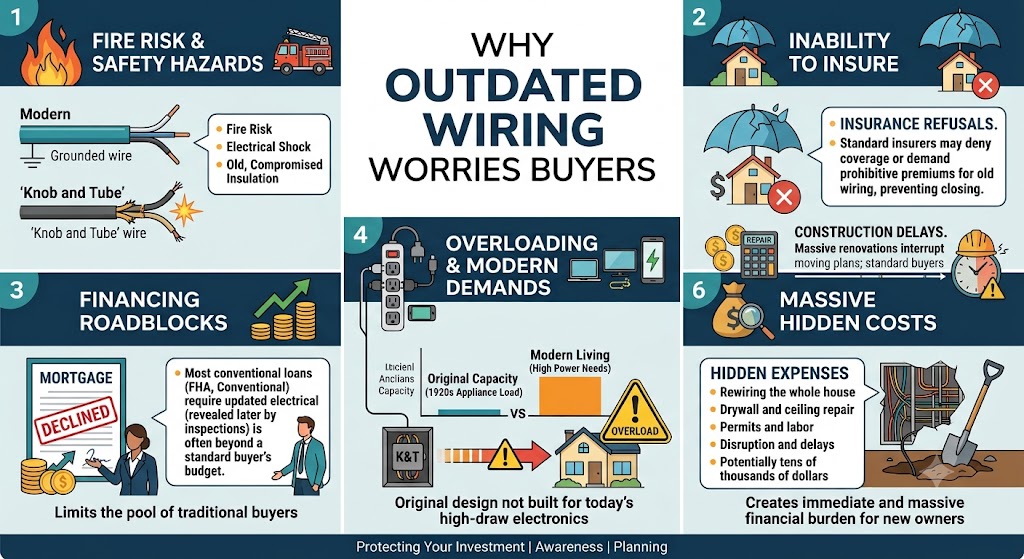
Electrical inspections could be a requirement by lenders financing a buyer’s purchase. If the electrical inspection reveals any issues with the wiring, the lender could require the wiring be replaced before closing escrow, or the buyer’s insurance company could refuse to cover the buyer. This can often be the cause of falling through at the last moment, once you have accepted an offer and started packing your belongings.
Your Options for Selling
- Rewiring prior to listing the home can be one of the priciest options, but ultimately provides a definitive resolution and may even bring an increase in the home’s value.
- If you are going to have to do something about your wiring issues, get estimates from multiple electricians, disclose the problem upfront, and then either price the house according to what you have done or give the purchaser an allowance so they can take care of it after they close.
- Distinguish your home for cash or investment buyers, as many are unconcerned with the condition of the wiring, since they are not going to be utilising traditional financing or require an insurance policy to close.
- Selling directly to an end-user who is paying cash will avoid any inspections, demands from lenders, or other requirements that are typically associated with buyers using financing. This makes it the buyer’s responsibility to take care of the wiring after closing.
Should You Rewire It Yourself First?
It really all comes down to how long you want to take and how much you want to spend. If you can spend a couple of thousand bucks and take a few weeks working on your house, then rewiring is a great way to open up your buyer pool to people who would like to use traditional financing to buy your property. On the other hand, if you don’t have the time, don’t have the funds, or just plain don’t want to deal with contractors or deal with inspections, you’re not required to rewire your property before selling. All you need is the right buyer.
The Bottom Line
Older electrical systems can make selling a conventional house more difficult; however, this doesn’t mean you must abandon your plans to sell. By being aware of alternative ways to sell, such as who may purchase your house in its present condition, we can help you achieve your goal of selling your home without having to rewire or go through the inspection or insurance process. AJ Buys Houses will provide you with a fair cash offer so that he pays you for the type of property you have, including any outdated electrical wiring.
FAQs
Q: Does having knob and tube wiring mean I legally can’t sell my house?
The sale of a home with knob-and-tube wiring does not violate any regulations. The house can be sold in its current condition, there are some buyers, particularly those who intend to use financing, who may encounter issues regarding financing and/or insurance.
Q: Why do insurance companies care so much about old wiring?
Insurance companies do not cover knob and tube wiring because it lacks an appropriate earth connection, which should be present in homes today due to increased electrical consumption in a typical household and each individual service branch. Due to this lack of safe grounding, insurance companies consider knob & tube to be unsafe and either charge you higher rates or refuse to give you coverage until you replace your K&T with an acceptable alternative. Since lenders require insurance before you can complete the closing process, having K&T in your home can delay a normal sale.
Q: My inspector flagged the wiring. Does that mean my buyer will walk away?
Although it’s not guaranteed, this could provide an opportunity for renegotiation. If the buyer requests your repair, asks for a credit, or walks away because the lender won’t approve the loan due to necessity of an upgrade will depend on the need of your buyer and their lender.
Q: Do I have to rewire the entire house before I sell?
You do not have to rewire your home if you are not planning on updating your home before selling it. Some people choose to do this so that they can sell their home at a higher price to traditionally financed purchasers. On the other hand not everyone is able to afford to or have the time to do this. Therefore you have many options available.