
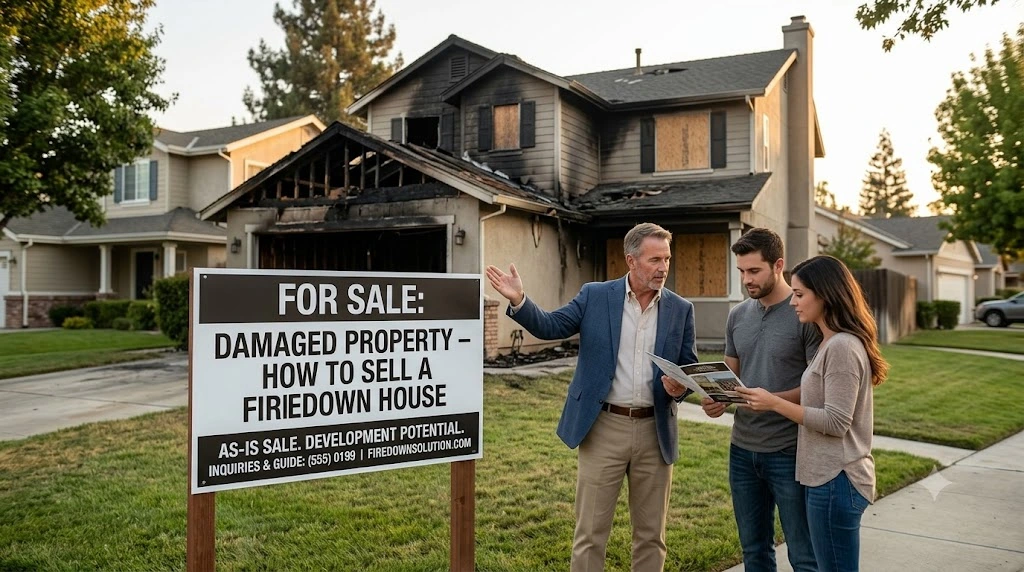
If your home was damaged by fire, there is no need to worry. You are not going to live in this condition any longer than necessary. While it is important to remember every charred wall does not need to be repaired before the sale; first, let’s discuss how you can sell your home after it has been damaged by fire without losing track of reality.
Step 1: Figure Out What You’re Dealing With
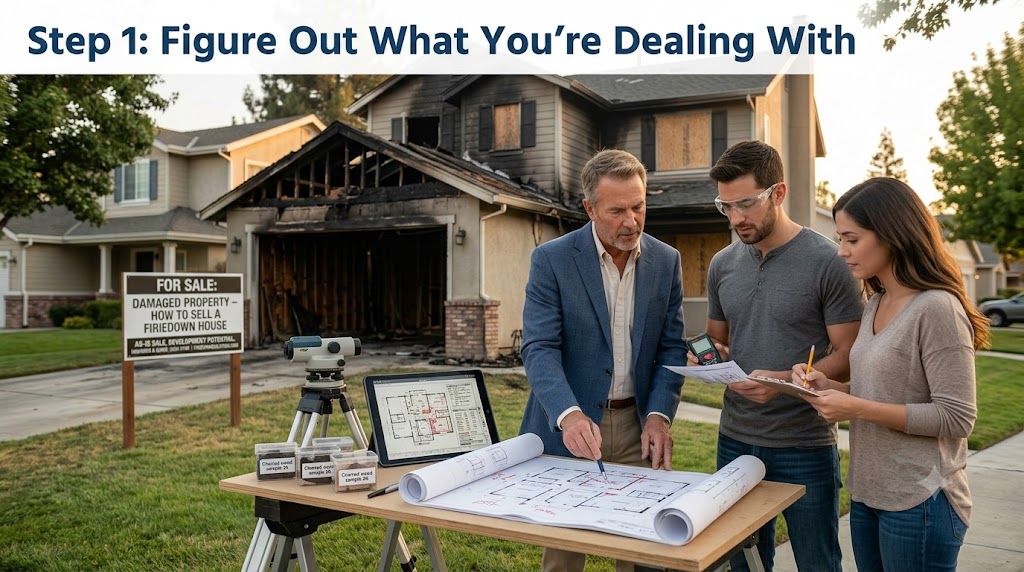
To get an accurate assessment of a property, a qualified professional should conduct a thorough evaluation. The damage to a property due to fire is not limited to what can be seen; smoke may have infiltrated the structure’s walls, insulation and ductwork, while water from the firefighting efforts will contribute to the development of potential problems, including mould. A complete understanding of the extent of work that will be required after purchasing a property gives you something tangible to show potential buyers or investors, as well as numbers to use in your negotiating process.
Step 2: Loop In Your Insurance Company
This is a non-negotiable clause in your contract. File your claim promptly (within a week), provide photographic evidence for all items in question, and retain records of all communications about your claim. The payout you receive will affect the choices you have (either a sufficient amount to remodel what remains of the home or an amount that does not warrant remodelling and requires a sale in its existing condition).
Step 3: Decide — Repair or Sell As-Is?
The main consideration when deciding on whether or not to renovate your home is how it impacts your selling price. Renovations generally increase your home’s resale value, but they will take months with contractors and required permitting before you can sell your home. Plus, you’ll need to come out-of-pocket to pay the contractors before your home can be sold.
On the other hand, selling your home as-is is typically quicker and easier than doing renovations, though you’ll likely receive a lower sale price. There isn’t one answer for everyone, as the correct decision will be based on how soon you need cash from selling your home, how much money is available (or planned) as an investment by you in the renovations and how much stress you are willing/able to endure. Generally, if you are looking for quick cash or do not plan on rebuilding/staying in that community, it is better to sell it “as-is.”
Step 4: Know Your Selling Options
You basically have 3 options:
- List for sale after repairs are completed – This works best if you have time, money and are willing to wait for a traditional closing process and renovation.
- List as-is for sale on the open market – Your agent needs to inform potential buyers upfront of the issues with your property. Expect lower offers and fewer interested buyers as a majority of prospective purchasers prefer a property that is completely move-in ready.
- Sell to an all-cash house buyer – These types of buyers will purchase your house in any condition including, but not limited to, fire damaged properties, will typically offer an all-cash purchase price, and can close quickly, normally in days vs. months. There are no repairs or staging needed.
Step 5: Price It Honestly
Homes that have been damaged by fire do not sell for their full Fair Market Value, and this is acceptable. It is advisable to obtain multiple appraisals of your property’s value (from an appraiser, a Realtor, or an investor paying cash) in order to minimize the risk of underpricing your house (getting less than what it is worth) and/or frightening potential purchasers with an unrealistic perceived value of their house.
Step 6: Be Transparent With Buyers
There is evidence to support the disclosure law. Not being truthful about the damage – in particular, fire damage, will most likely cause you more trouble than simply being upfront with potential buyers. If the buyer has price-sensitive information, it stands to reason they will be less likely to abandon the deal prior to closing – especially if they are an investor.
The Bottom Line
While selling a house that has been affected by fire can be overwhelming, you will be relieved to know that it is actually very common, and also that many people have successfully sold their fire-damaged home. No matter which route you choose whether to repair your fire-damaged home, list your home with a real estate or homeowner agent, or sell your fire-damaged property outright for cash, we suggest the best option for you is the one that works best for both the time you need and your overall comfort level.
If you prefer to avoid making repairs, dealing with the back-and-forth of a real estate agent, and waiting for your house to sell, then AJ Buys Houses focuses exclusively on purchasing fire-damaged homes in as-is condition, with quick cash offers, and a simple and stress-free closing process, so you can move on and not have the charcoal walls of your home on your mind any longer.
FAQs
Can I even sell my house after a fire, or am I stuck with it?
Fire damage does not mean a house Is unsellable; many homeowners do not understand this. You may either sell the house AS-IS, after repairing it, or to a cash buyer who is interested in buying damaged homes. You will have many other options than you had originally considered.
Do I have to fix everything before I list it?
You do not have to fix your home before selling it. Many homes destroyed by fire are sold “as-is.” Selling your house as-is typically results in a lower final sale price but will save you time (from the time it takes to hire contractors), money (from out-of-pocket expenses), and the effort required to obtain permits for repairing the home.
Will I lose a ton of money selling it as-is?
It is normal to receive a lesser amount than what you would have received for a fully renovated property, but the term ‘wholesale’ is subjective depending upon each buyer’s individual circumstances. As a result, it is important to obtain at least two independent appraisals (by way of an Appraiser, a realtor, possibly even a cash buyer) to get an accurate depiction of the property’s true value based upon current day market conditions or facts rather than just simply ‘guessing’ about what ‘might be’ or might not be.
What do I do first — call insurance or a realtor?
You should get your claim filed as soon as possible because having documentation of your loss and damage will be an important part of how Insurance determines what they pay (often determining if it is economically feasible to repair).