
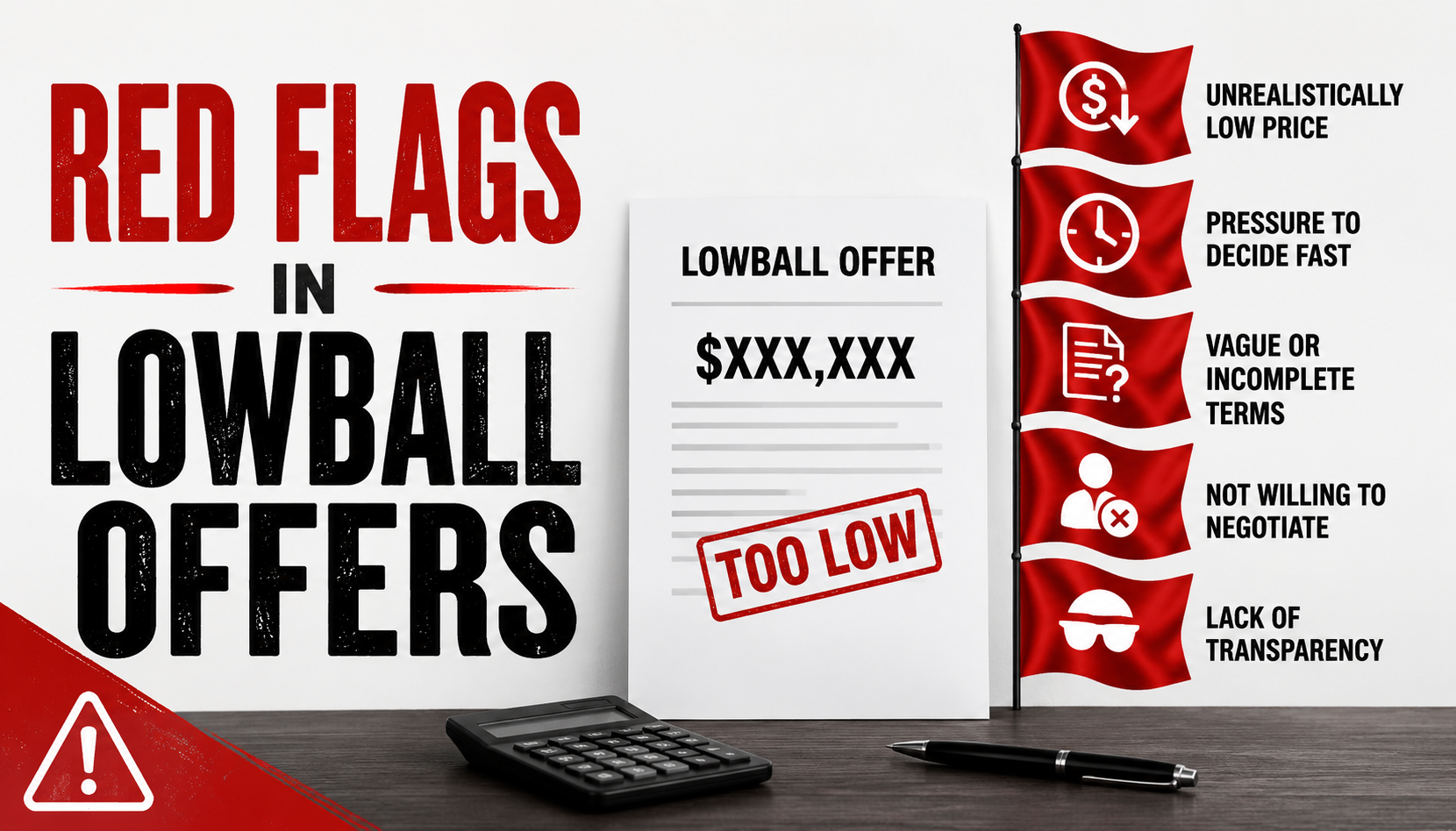
If you’re selling your home, understanding red flags in lowball offers is important. Most homeowners in Winnipeg receive offers that they think are convenient but they aren’t actually anywhere close to the true value of their property. You may be in a financial situation where you are facing foreclosure, going through a divorce, inheriting a home, or being forced to sell quickly because of a job loss. There are individuals out there who will try to push you into accepting a low offer or make a verbal agreement to keep you from asking for clarification on anything before you sign the contract. After reading this page, you will have a better understanding of what constitutes a lowball offer and feel more confident about protecting your financial interests and making sound decisions during the sale of your home.
Table of Contents
What Is a Lowball Offer?
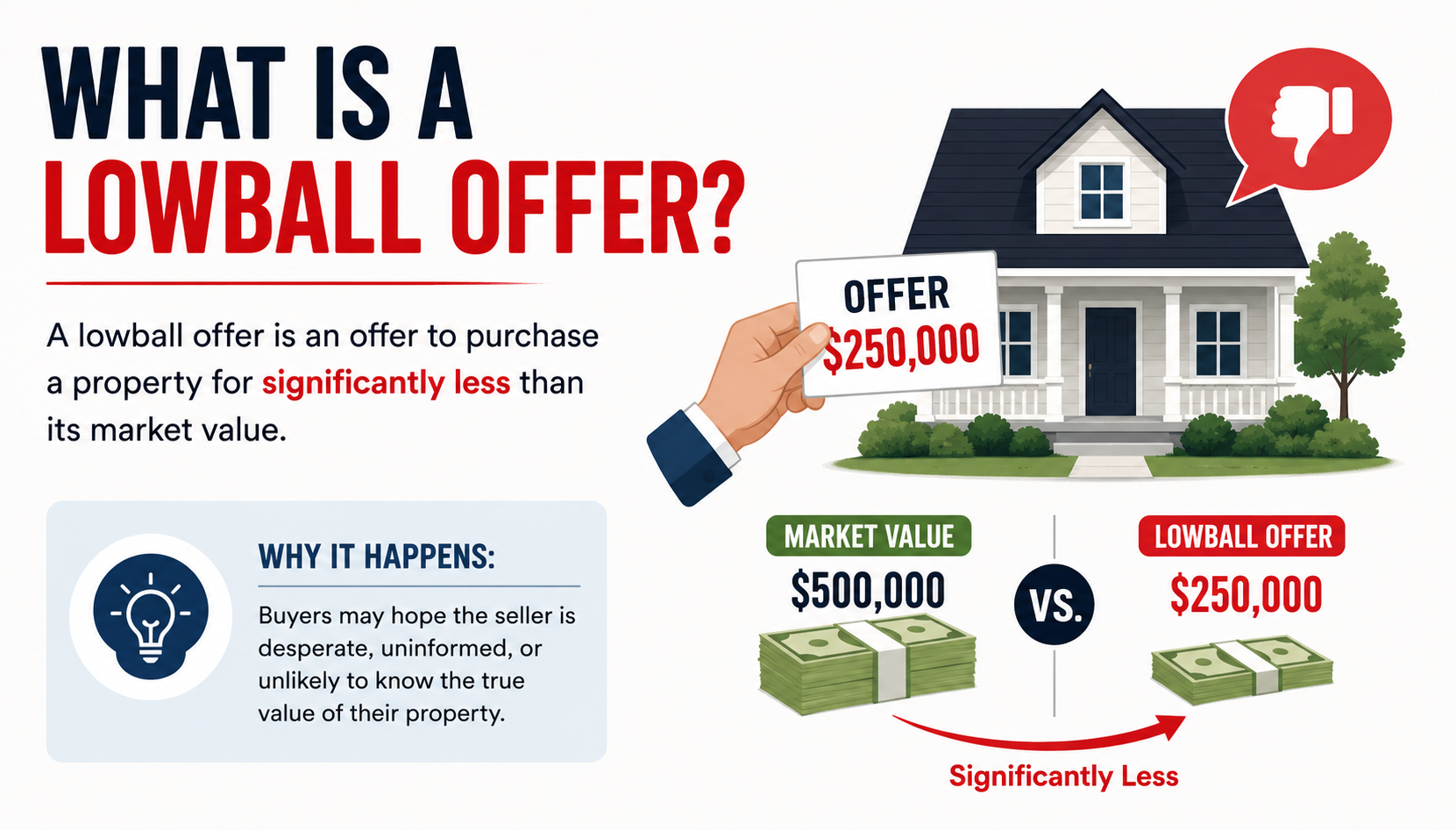
A very low offer for your property is called a lowball offer. If you were to sell your house to an investor or cash buyer, the investor/cash buyer may be able to buy the house for less than the maximum possible price because the investor/cash buyer takes on responsibility for repairs and weather risks. There is also a distinction between a fair cash offer and an unfair cash offer.
Some buyers purposely make exceptionally low cash offers with the expectation that they will be able to find a seller who is motivated, uninformed, or in a challenging situation. This situation can occur when the seller is in foreclosure, going through a divorce, selling inherited property or needs to relocate quickly.
Common Red Flags in Lowball Offers
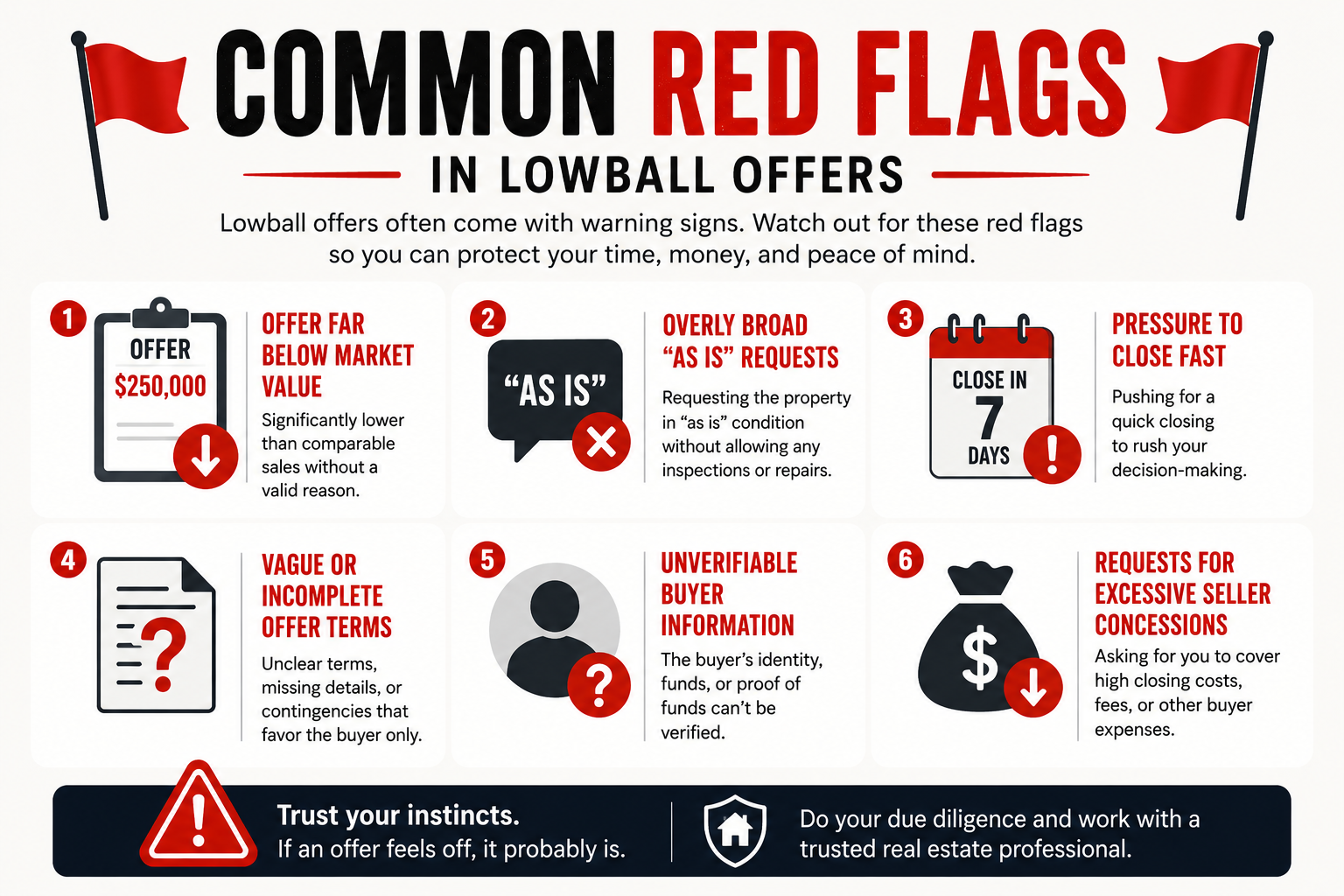
The Buyer Pressures You to Decide Immediately
A major indication of unsolicited pressure is using aggressive urgency. For example, if the potential buyer says things like
- “This deal will expire today.”
- “You need to sign right now.”
- “You’re never going to see a deal like this again.”
He/she may be trying to prevent you from taking the time to carefully think through your options. A trustworthy buyer, on the other hand, will give you time to try to understand the terms of the deal and answer your questions.
They Avoid Explaining Their Numbers
As a professional buyer, if you can’t explain how you got to the number that you offered, and are not willing to provide information on any of the following topics, then your offer should probably be questioned, as it likely does not accurately reflect the current market value of the property being purchased. Buyers who are willing to share all aspects of their offer should look forward to helping you understand what their offer actually represents (with crystal clear communication).
The Offer Changes Later
Some buyers present a fair initial offer, then significantly cut the final number at closing using what is often termed “bait and switch,” typically citing any of the following as their justification for doing so:
- They have discovered some unexpected repairs
- They have encountered financing issues
- They have learned that local market conditions have shifted.
A serious buyer will generally abide by the initial agreement unless there is a legitimate issue that is specifically outlined in the contract.
They Ignore the Actual Condition of Your Home
Sometimes buyers will put in generic offers on properties without properly investigating and just assume that they will have to make a lot of repairs to the property.
A buyer who is actually serious about purchasing a property should ask reasonable questions regarding the following:
- Condition of the roof
- Condition of plumbing and electrical systems
- Any renovations or updates
- Overall condition of the structure
To make an offer without asking the above questions could simply be an attempt to get the property at the lowest price possible.
How to Protect Yourself From a Bad Offer
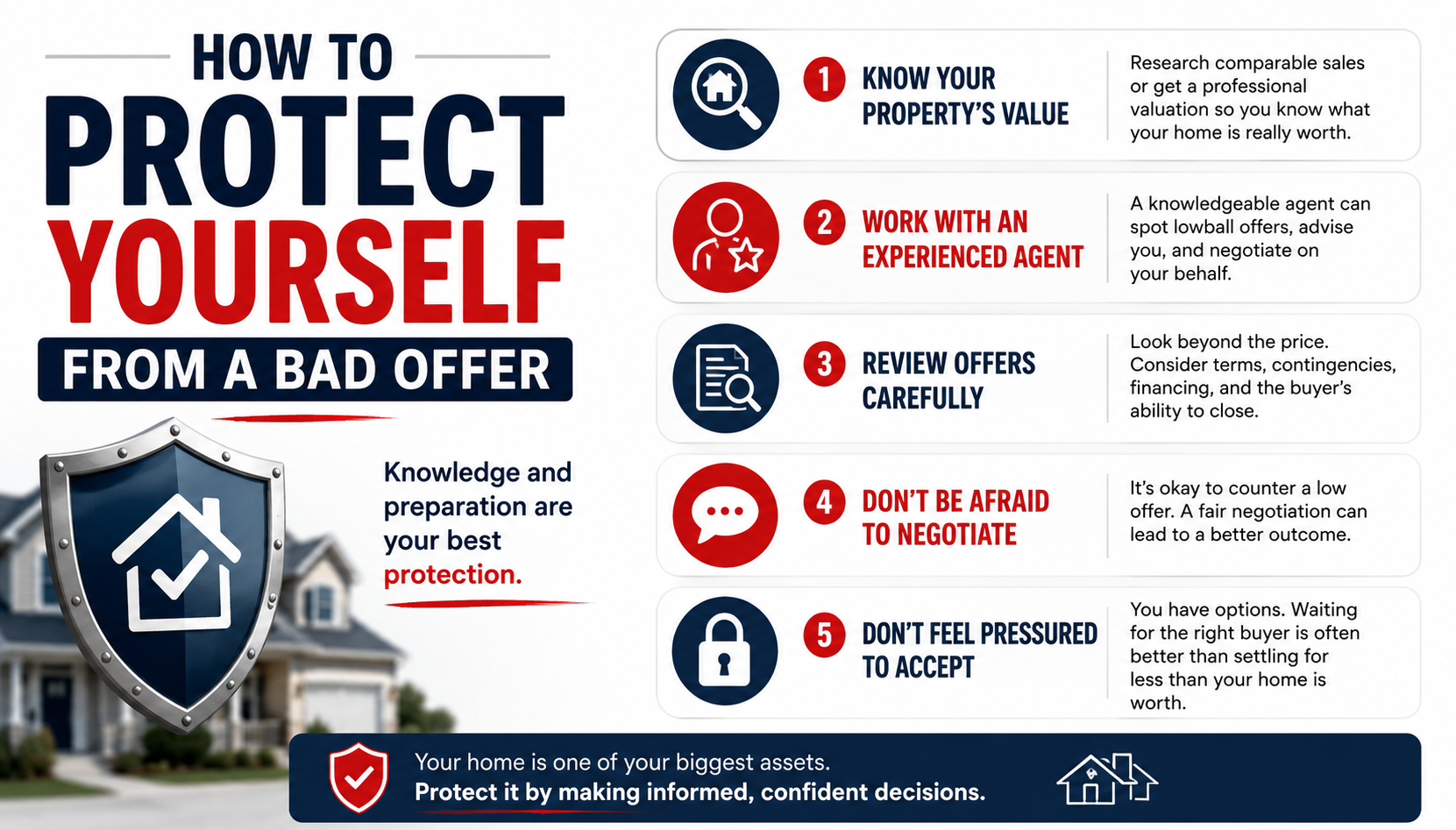
There is no obligation to accept the first offer made to you. Take your time to:
- Compare offers from different sources.
- Make sure to research local housing prices.
- Read through all documents and contracts carefully before signing.
- Ask as many questions as needed about how the entire process works.
- Hire an experienced real estate agent or lawyer.
Even in emergencies, knowing what your options are can save you money from making bad decisions.
Final Thoughts
In some cases, a low offer is actually a good thing! For instance, if the house you’re trying to sell needs repairs or if time is of the essence for you as a seller then a lower than average price could still be in your best interest. Even with those types of circumstances, there are still some things you should watch out for in order to prevent being “taken advantage of”. A fair buyer will communicate well with you and explain their process to you honestly and without pressure so that you feel comfortable making your own choice.
If you live in Winnipeg and want to sell your home then one option to consider is AJ Buys Houses, where they provide honest information about how to sell your home quickly and easily without putting undue pressure on you as a seller.
FAQs
How do I know if an offer on my house is too low?
A lowball offer sometimes is significantly less than what your home is currently worth, assessed by comparable homes that in the last year sold in your general vicinity. If a seller cannot provide a logical explanation as to why an offer is low, you may want to consider that a red flag.
Are all cash offers considered lowball offers?
No, not all cash offers are unreasonable. Cash buyers typically make slightly lower offers to close on homes faster and “as-is”. What really matters is whether or not the offer made is deemed acceptable, has been clearly articulated, and contains sufficient documentation to support the offer.
Why do some buyers pressure homeowners to accept fast?
Fast-paced buyers will often instill a sense of urgency in the seller, which will eliminate the seller’s ability to compare different offers and/or review contracts thoroughly. If someone tells you to “sign today or lose the deal,” it is wise to take your time before signing anything so that you can review the documents carefully.
Can a buyer lower their offer after I accept it?
Yes, there are a select group of buyers who attempt to back out of the transaction after acceptance by attempting to reduce their offer based on “major repairs” or “unexpected costs”. For this reason, it is very important to work with a reputable buyer and to read your contract very thoroughly prior to signing.




Comments are closed